The Academy of Justice under the Supreme Judicial Council of the Republic of Kazakhstan has published a new practice-oriented textbook on conciliation
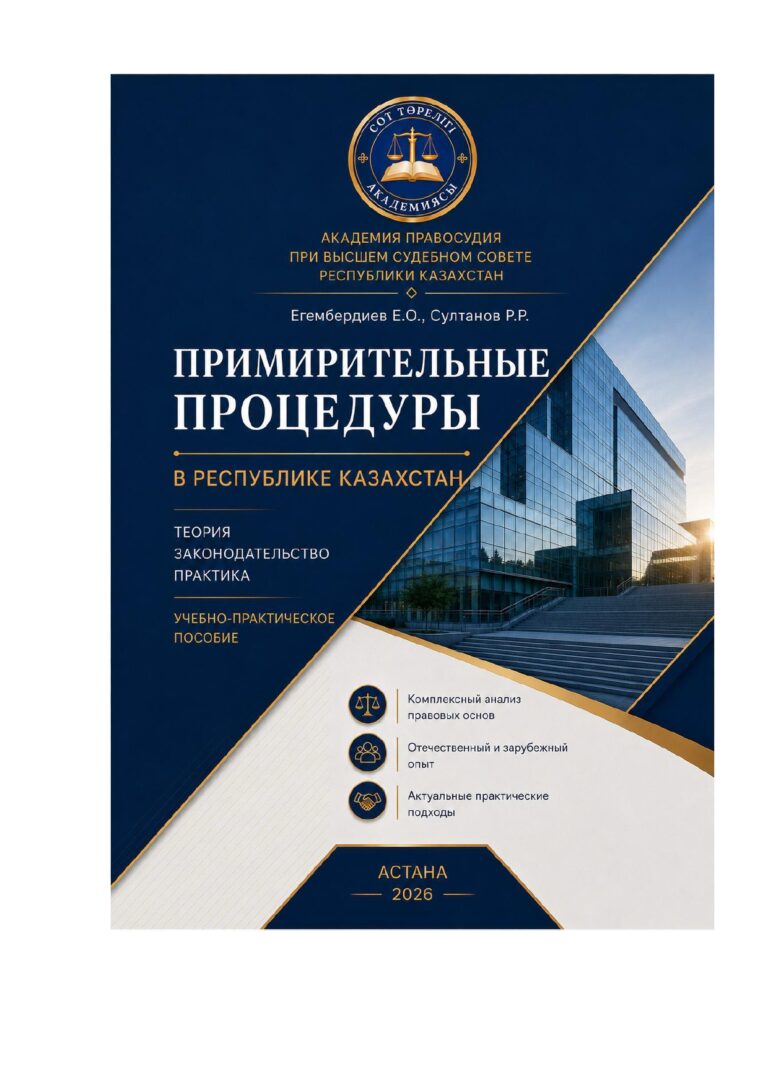
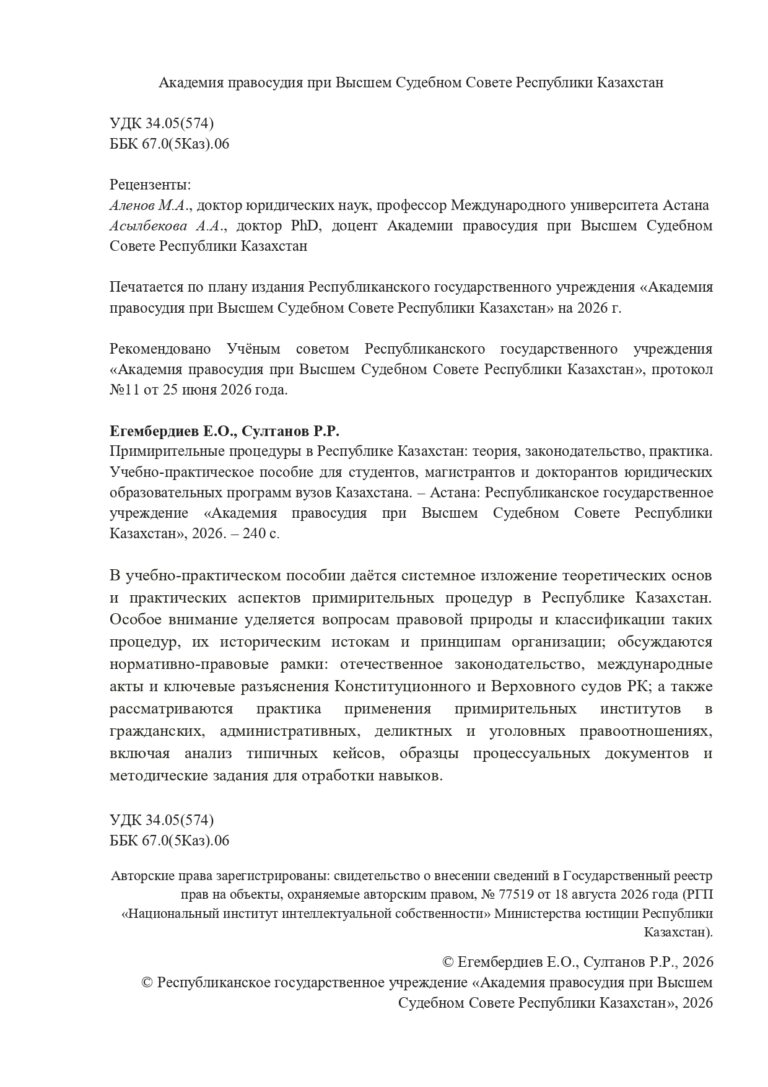
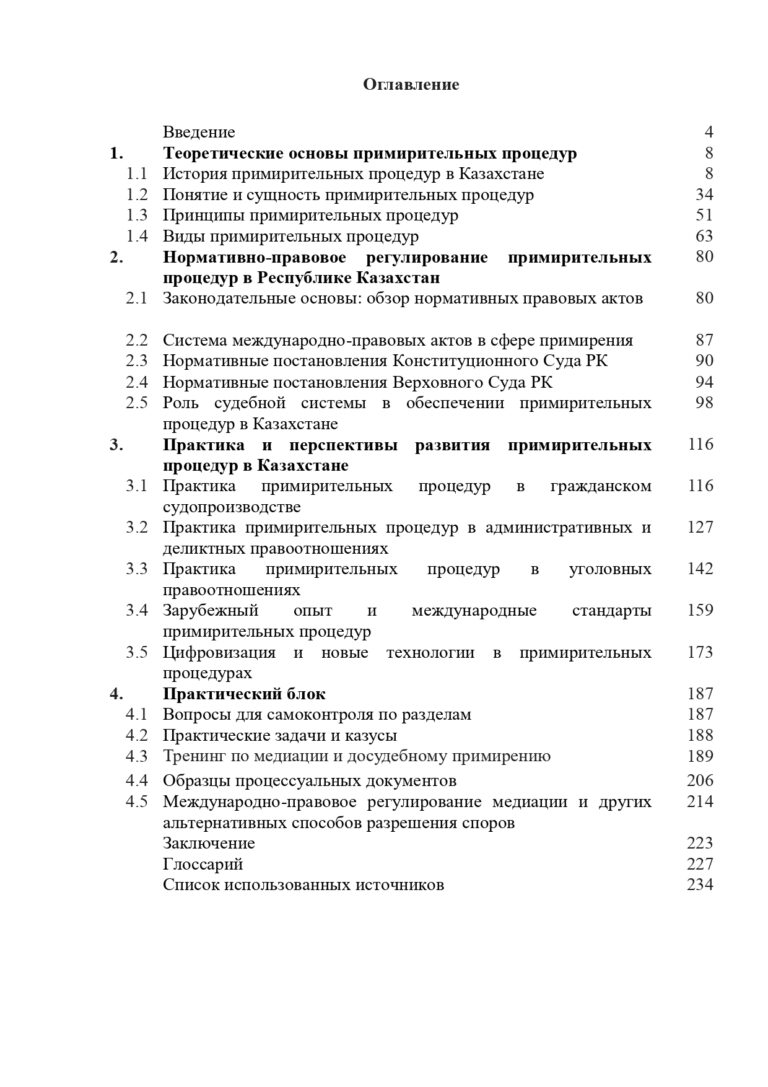
The Academy of Justice under the Supreme Judicial Council of the Republic of Kazakhstan has published a new practice-oriented textbook on conciliation, tracing its path from the court of the biys to artificial intelligence. What do the court of the biys, modern mediation, the settlement agreement and digital technology have in common?
At first glance, almost nothing. In fact, they share a single idea: a conflict need not end with a winner and a loser. This is the idea the authors set out to examine in the new textbook “Conciliation Procedures in the Republic of Kazakhstan: Theory, Legislation, Practice”. The authors are Professor Yerzhan Egemberdiev and Professor Ruslan Sultanov of the Academy of Justice under the Supreme Judicial Council of the Republic of Kazakhstan. The publication has been recommended by the Academic Council of the Academy of Justice.
More than a book about mediation. The authors deliberately go beyond the conventional discussion of mediation. The textbook treats conciliation as an integrated legal institution, examining its history, theory, legislation, case law and practical mechanisms. The reader follows an unusual route. It begins in the steppe, with the court of the biys, where authority, the spoken word and the aim of restoring social balance were the principal means of resolving conflicts. It then moves to contemporary law: mediation, judicial conciliation, the participatory procedure and the settlement agreement. Finally, it arrives at what until recently seemed like science fiction: online dispute resolution, digital technology and artificial intelligence. In this way, the historical tradition of conciliation is linked to the digital transformation of modern justice.
From knowing to doing. What sets this textbook apart from a conventional one is its design. The authors go beyond setting out statutory provisions and scholarly approaches. The material is structured to move from theory to professional action. The book includes:
– a historical and legal analysis of conciliation mechanisms;
– the concept, nature and principles of conciliation procedures;
– an analysis of the legislation of the Republic of Kazakhstan and of international instruments;
– guidance issued by the Constitutional Court and the Supreme Court of the Republic of Kazakhstan;
– conciliation practice in civil, administrative, tort and criminal matters;
– foreign experience;
– a dedicated section on digitalisation and new technologies;
– practical problems and case studies;
– training in mediation and pre-trial conciliation;
– templates of procedural documents.
In other words, the book aims not merely to answer the question “What is conciliation?” for the future lawyer. It leads them to a harder question: “What must I do so that this conflict can genuinely end in agreement?”
Rediscovering the power of the word. One of the most compelling features of the textbook is its historical perspective. Conciliation is not presented as a purely modern invention. The authors turn to traditional mechanisms of conflict resolution in Kazakh society and examine the institution of the court of the biys in detail. In that system, delivering a decision was not all that mattered. Its central aims were to restore the disturbed balance, preserve social harmony and prevent new conflicts. The history of the court of the biys is therefore more than a historical note. It becomes a mirror held up to modern justice. What happens to a conflict after judgment is delivered? Does the dispute end with the court’s ruling? Or do relationships between people continue, and need to be restored?
Four paths to conciliation. The contemporary Kazakhstani model examined in the textbook comprises four main types of conciliation procedure: mediation; judicial conciliation; the participatory procedure; and the settlement agreement. Each mechanism has its own legal nature and procedural features. For a lawyer, therefore, it is not enough to know that conciliation exists; what matters is understanding which mechanism can be used, when and how. The lawyer of the future must see the conflict behind the claim. Arguably, the most forward-looking part of the textbook begins where the familiar discussion of mediation ends. A separate section is devoted to the digitalisation of conciliation procedures: online formats, ODR, videoconferencing, artificial intelligence and other technologies. The authors examine not only the opportunities that digitalisation offers but also the legal challenges and risks it brings. In particular, they address the legal status of online mediation, the use of new digital tools and the need to take the digital divide into account. The textbook thus brings together two seemingly opposite things: an ancient culture of conciliation and the most advanced technologies for resolving disputes. Not just a textbook, but professional training. The practical section helps learners move from knowing a rule to applying it: solving a case, simulating a situation, determining the steps toward conciliation and drafting the relevant document. That is why the publication is intended not only for bachelor’s, master’s and doctoral students in law programmes, but also for practising lawyers, judges, mediators and other professionals who deal with legal conflicts.
The book’s central question. Perhaps the most accurate way to describe the new textbook is not to list its chapters but to pose a single question: can a modern lawyer learn to see in a court dispute not only the legal claims, but also the conflict of human interests behind them? The authors answer this question by bringing together theory, legislation, case law, history and practical training.
In its conclusion, the textbook frames this approach as developing a distinctive professional skill in future practitioners: the ability to see “a human conflict behind a legal dispute, and the parties’ genuine interests behind their claims.” Therein, perhaps, lies the book’s central message. Because sometimes the best outcome of a legal dispute is not the victory of one party over the other, but a situation in which both parties can go on living and working after the dispute is over.